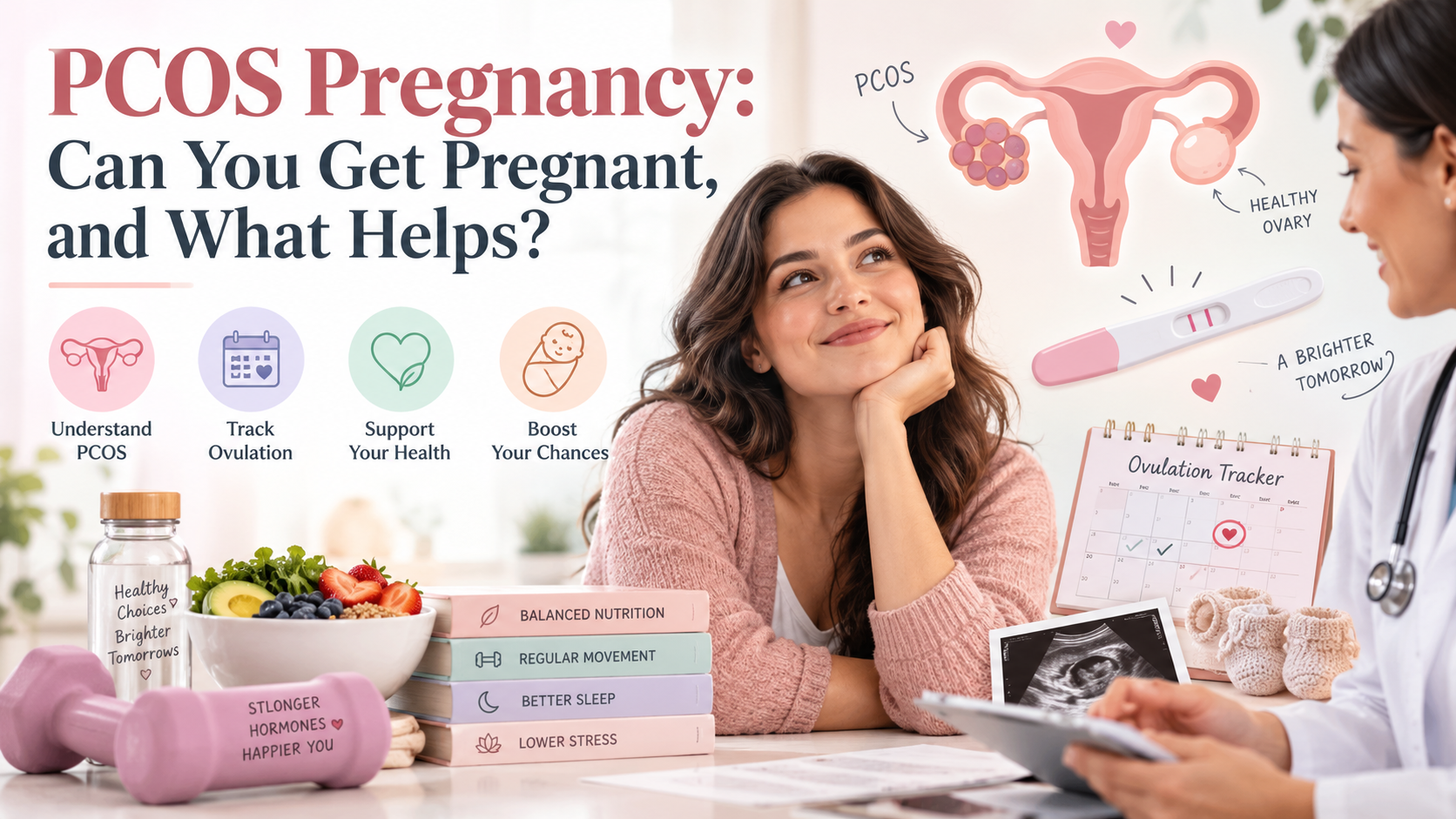
PCOS Pregnancy: Can You Get Pregnant, and What Helps?
Yes, many people with PCOS become pregnant. Here is what matters before conception, when to ask for fertility help, and what to watch once you are expecting.
PCOS can make ovulation less predictable, which may mean fewer opportunities to conceive. It does not mean pregnancy is impossible. An individual plan can start with a review of cycles, general health and other fertility factors. If needed, a clinician can discuss treatments that help ovulation. During pregnancy, blood sugar and blood pressure deserve particular attention. WHO and the international PCOS guideline support this approach.
Can I get pregnant with PCOS?
Yes. A PCOS diagnosis describes a condition that can affect ovulation, periods and metabolic health. It is not a verdict on whether you can have a child. Some people conceive without fertility treatment. Others need help getting ovulation to occur regularly, and some have a separate fertility issue that also needs attention. The right next step depends on your age, cycle pattern, medical history and how long you have been trying.
That distinction matters if you have spent months reading success stories online. One person's experience cannot predict yours. It is possible to have PCOS and ovulate. It is also possible to have a period without knowing exactly when, or whether, ovulation occurred. A clinician can help you work out what is happening instead of making you guess from an app.
“Your eggs are not ‘bad’, and having many follicles on a scan does not mean you are infertile.”
Dr. Om J Lakhani, endocrinologist in Ahmedabad, in his patient explanation of PCOS and pregnancy.
The international PCOS guideline also advises reassuring patients that pregnancy can often be achieved naturally or with assistance. That reassurance can sit alongside an honest discussion of timing and treatment. It should never be turned into a guarantee. Read the guideline recommendations.
How does PCOS affect pregnancy chances?
Ovulation is the release of an egg from an ovary. Pregnancy is harder to plan when ovulation happens irregularly or not at all. PCOS can disrupt the hormone signals involved in this process. It can also occur alongside insulin resistance and other health issues that matter before and during pregnancy. This is why a useful article on PCOS pregnancy must discuss more than a positive test. It needs to cover preparation and ongoing care, too. WHO explains the condition and its effects.
Which PCOS symptoms are worth mentioning to a doctor?
Tell your clinician if your periods are widely spaced or absent, or if you have acne, increased facial or body hair, hair thinning, or concerns about weight or blood sugar. These can help build a fuller picture. None proves PCOS by itself. The cause of irregular periods should be evaluated, and other explanations may need to be ruled out. A scan showing follicles is not, by itself, the whole diagnosis. WHO's diagnostic overview describes the combination of features clinicians consider.
Keep a simple record of period dates, any positive pregnancy tests, medicines and supplements, and previous test results. This gives your appointment a useful starting point. If your periods are very irregular, you do not need to wait for a full year of unsuccessful trying before asking what the pattern means for conception. ASRM's fertility evaluation guidance recommends prompt evaluation when a condition known to cause infertility is present.
What to do before trying to conceive with PCOS
A preconception visit is a practical place to start. It lets you ask about ovulation and review conditions that could affect a pregnancy. The international PCOS guideline highlights blood pressure, blood glucose, nutrition, folate, exercise, sleep and mental health. These are topics for an individual conversation, not a demand to reach a perfect number before you can seek help. See the preconception recommendations.
Ask about glucose testing and blood pressure
The guideline recommends an oral glucose tolerance test when planning pregnancy or seeking fertility treatment with PCOS, and a blood pressure check at this stage. These help identify issues that may need attention before conception. Ask your clinician what testing is appropriate for you and when it should be repeated if you become pregnant. A normal result today does not replace prenatal care later. International PCOS guideline.
Review medicines before a positive test
Bring a list of everything you take, including prescriptions, supplements and products marketed for PCOS. A medicine used for acne, weight management or cycle control may need a different plan when pregnancy is the goal. Do not stop prescribed treatment or begin a fertility medicine based on a blog post. Your clinician can explain what to continue, change or stop, and the timing. Ask about folate supplementation as part of routine preconception care. International PCOS guideline.
Is there a special PCOS diet for pregnancy?
There is no single food plan that makes pregnancy happen. A PCOS diet should be realistic enough to follow in your household and suitable for your health needs. If you live in India, that may mean looking at your usual meals, such as roti, rice, dal, vegetables, curd, eggs or other protein foods, rather than buying a costly menu labelled as a cure. A registered dietitian can help if you have questions about blood sugar, nutrition or food restrictions.
Healthy eating and physical activity have value even when they do not produce weight loss. The guideline does not identify one diet composition as clearly superior for PCOS outcomes. Avoid extreme diets and claims that a particular ingredient will reverse PCOS or guarantee conception. WHO on healthy lifestyle; international PCOS guideline.
Interactive: make your preconception appointment list
Tick what you have discussed. This is a conversation aid, not a medical score or a requirement to complete every item before trying.
My period pattern and whether I may be ovulating
Blood pressure and whether glucose testing is appropriate
Medicines, supplements and folate advice
Other possible fertility factors for me and my partner
When to return if pregnancy has not happened
0 of 5 topics marked as discussed.
What PCOS treatment can help with pregnancy?
PCOS treatment for pregnancy is chosen around the actual reason conception has been difficult. If ovulation is the main issue, a doctor may discuss medicine that helps an egg develop and release. If there are other factors, such as a sperm or tubal concern, addressing ovulation alone may not solve the problem. A fertility evaluation can therefore include both partners where relevant. ASRM fertility evaluation guidance.
When might letrozole be discussed?
For anovulatory infertility linked to PCOS, with no other infertility factors, the international guideline recommends letrozole as the first medicine for inducing ovulation. It is prescribed and monitored by a clinician. It must not be taken if a pregnancy may already exist. Your doctor can explain local prescribing rules, what monitoring is needed and whether it fits your situation. This information is meant to help you ask informed questions, not to choose a dose yourself. International PCOS guideline, fertility treatment section.
Where do metformin, other medicines and IVF fit?
Metformin may be considered for some people with PCOS, including for metabolic reasons. For ovulation induction alone, the guideline notes that more effective agents are available. A clinician may also discuss clomiphene, injectable medicines or other options depending on test results and prior treatment. IVF is one possible path, but a PCOS diagnosis alone does not mean everyone needs it. Treatment choices involve cost, monitoring, benefits, side effects and personal preferences. International PCOS guideline.
If you are trying to work out how to get pregnant with PCOS, the most useful first question is often: “Am I ovulating, and do we need to check anything else?” It opens a clearer conversation than asking for one treatment by name. Bring your cycle record, your questions and your partner's relevant history. You deserve a plan that explains why each test or treatment is being offered.
What changes once you are pregnant with PCOS?
Tell your prenatal care team about your PCOS diagnosis and any medicines you were using. Many people with PCOS have healthy pregnancies, but population studies and clinical guidelines identify higher risks of some complications. This does not predict what will happen to you. It means your care team may pay closer attention to blood sugar, blood pressure and other individual risk factors. WHO PCOS fact sheet; international PCOS guideline.
Glucose and blood pressure monitoring
PCOS is associated with a higher risk of gestational diabetes and high blood pressure in pregnancy. The international guideline recommends glucose testing before pregnancy where possible, or at the first prenatal visit if it was not done earlier, with testing again at 24 to 28 weeks. Your obstetrician will decide the schedule that fits your health and local care pathway. Attend routine visits, and ask what each test is for if the plan is unclear. International PCOS guideline.
PCOS pregnancy symptoms versus ordinary early pregnancy symptoms
A missed period may be difficult to interpret when cycles are irregular. Fatigue, nausea and breast changes can have several explanations and cannot confirm pregnancy on their own. If you think you may be pregnant, use a pregnancy test and contact a healthcare professional for advice about next steps, especially if you have pain, bleeding or questions about medication. Avoid treating an app's predicted ovulation date or a symptom list as a diagnosis.
After a positive test, arrange prenatal care and tell the team about your history. Ask how they want you to handle existing medicines rather than changing them alone. Also ask which symptoms should prompt urgent assessment in your circumstances. A general blog cannot judge the severity of an individual symptom or replace that plan.
Questions people ask about PCOS pregnancy
Can I get pregnant naturally with PCOS?
Yes, it is possible. PCOS can make ovulation irregular, but it does not rule out natural conception. If you are unsure whether you ovulate or have very irregular cycles, a clinician can help assess that and discuss your options. International PCOS guideline.
When should I ask for fertility help?
Ask sooner if your periods are very irregular or absent, or if another known fertility concern exists. For people with regular cycles and no known issue, fertility evaluation is usually considered after 12 months of trying if under 35, or after 6 months if 35 or older. Individual circumstances can change that timing. ASRM fertility evaluation guidance.
Does PCOS automatically make pregnancy high risk?
No single label predicts an individual outcome. PCOS is associated with increased risks, including gestational diabetes and hypertensive disorders, so your prenatal team should know about it and tailor monitoring to your health. WHO; international guideline.
Is PCOD different from PCOS?
PCOD is a term many readers in India encounter. The evidence-based clinical guidance cited here uses PCOS. Because labels can be used differently in everyday conversation, ask your clinician what diagnosis is recorded for you and what findings support it. A scan showing polycystic ovaries alone does not establish PCOS. WHO diagnostic overview.
Should I keep taking metformin after I become pregnant?
Do not decide based on a general article. Metformin is used for different reasons, and the pregnancy guideline does not recommend it as a universal way to prevent PCOS-related pregnancy complications. Ask the clinician who prescribes it and your prenatal team for a plan specific to you. International PCOS guideline.
The next useful step: If pregnancy is your goal, book a preconception appointment and bring your cycle history and medicine list. If you are already pregnant, share your PCOS history with your prenatal team. This article is educational and cannot replace individual medical care.